The Art of Understanding
A Philosophy of Curiosity, Complexity and Creation
Mouad Krikbou · Essay · 15 November 2026 · 7 min read
There is a particular way of looking at the world that begins with a simple refusal: the refusal to accept things merely because they are familiar, established or widely understood.
It is not necessarily a rejection of convention, nor a belief that everything must be questioned. It is something quieter and perhaps more fundamental: a persistent curiosity about what lies beneath the surface. Why does something work the way it does? What principles govern it? What assumptions make it possible? And what might become visible if we approached it from an entirely different perspective?
To live with this disposition is to see the world less as a collection of facts and more as an interconnected landscape of questions.
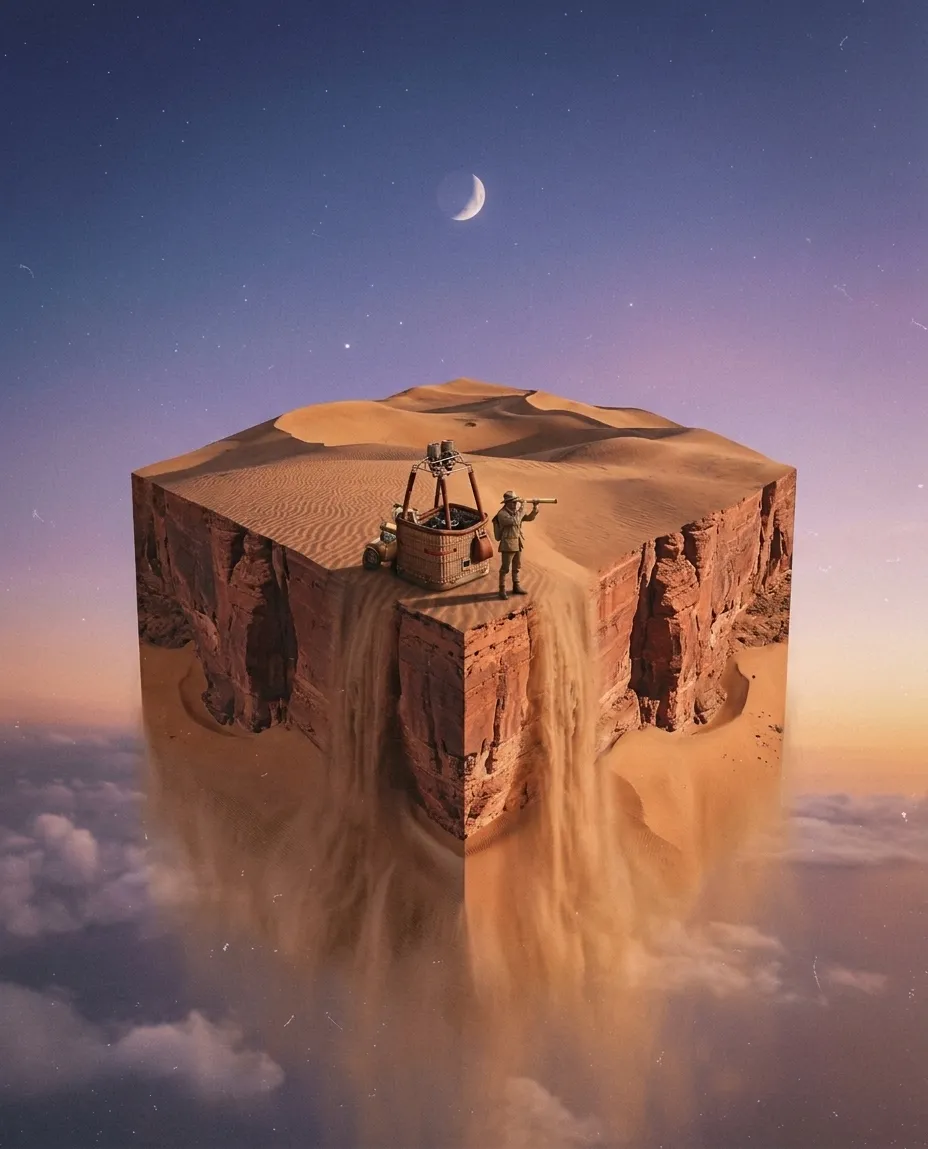
Understanding is more valuable than knowing
Knowledge and understanding are often treated as interchangeable, but they are not the same.
Knowledge is the accumulation of information: facts, theories, experiences and explanations. Understanding begins when these pieces acquire meaning in relation to one another. It is the ability to recognise patterns, identify underlying principles and distinguish what is fundamental from what is incidental.
One can know how a system works without understanding why it was designed that way. One can memorise a theory without grasping the assumptions on which it rests. One can collect explanations without ever developing a coherent picture of the subject itself.
Understanding requires a different kind of engagement. It asks us to move beyond the immediate answer and examine the structure behind it.
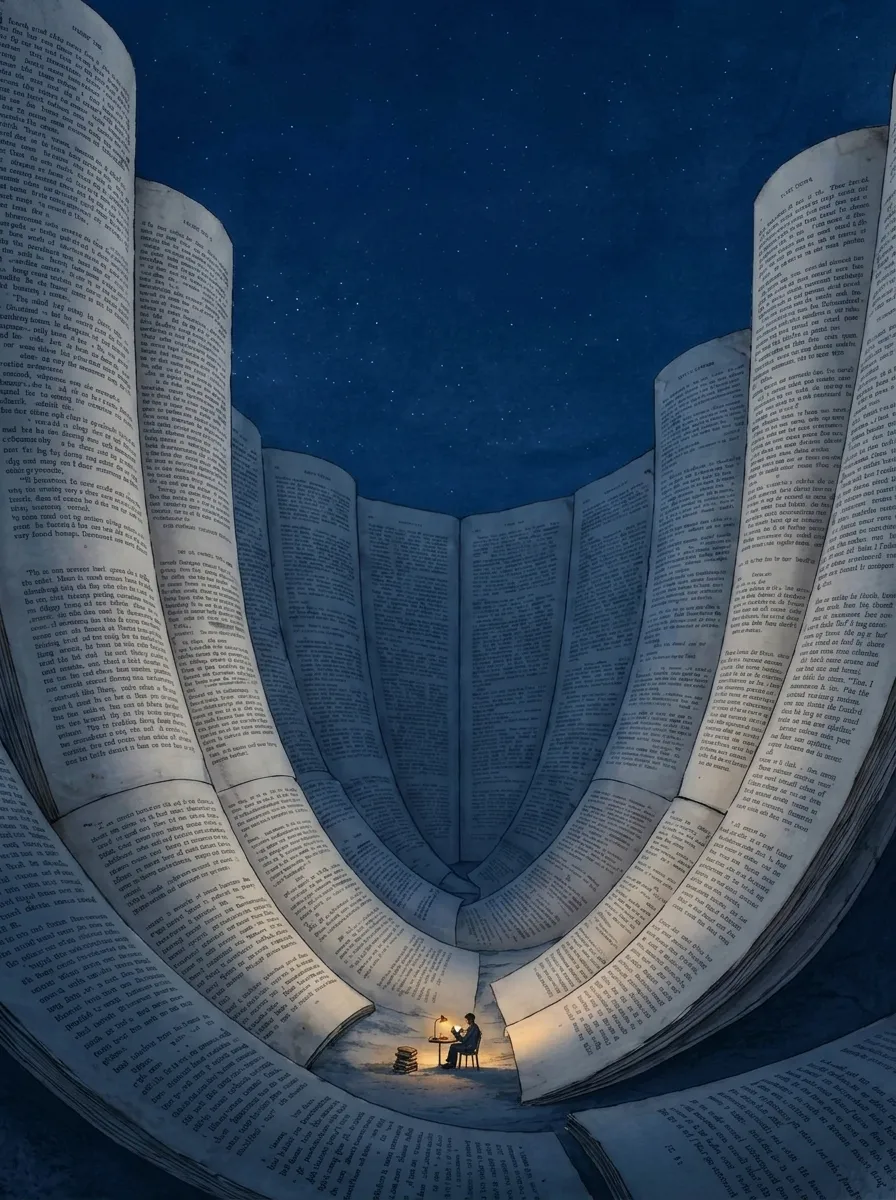
This is why questioning matters. Not every question needs an immediate answer, and not every answer deserves unquestioned acceptance. Sometimes the most valuable outcome of inquiry is not certainty, but a better question.
The world is a system of connections
Reality rarely respects the boundaries we create between disciplines.
Physics, mathematics, biology, philosophy, technology and art may appear to occupy separate territories, each with its own vocabulary and methods. Yet beneath their differences, they often explore related questions: structure, change, information, relationships, emergence and the nature of complexity.
A mathematical principle can illuminate a physical phenomenon. A concept from biology can inspire an approach to engineering. Ideas about cognition can challenge how we design artificial intelligence. Artistic composition can reveal something about balance, proportion and the elegance of a well-designed system.
The value of crossing disciplines is not simply to know a little about everything. It is to develop the ability to recognise connections that are invisible from within a single field.
Specialisation provides depth. Exploration provides perspective. The most interesting insights can emerge where the two meet.
Perhaps the world is not as fragmented as our categories suggest. Perhaps the boundaries between disciplines are often more useful for organising knowledge than for describing reality itself.
Complexity is not the same as depth
Complexity has a certain attraction. Elaborate explanations, sophisticated systems and intricate theories can create the impression of depth. But complexity alone does not guarantee understanding.
A system can become complicated because the problem itself is complicated. It can also become complicated because its design lacks clarity.
There is a difference between something that is inherently complex and something that has been made unnecessarily complicated.
True understanding often reveals a simpler structure beneath an apparently complicated phenomenon. This does not mean reducing everything to simplistic explanations. It means identifying the essential relationships without losing the details that matter.
The same principle applies to creation. In engineering, a good architecture is not the one with the greatest number of components, but the one whose components work together with clarity and purpose. In art, elegance often comes not from adding more, but from knowing what can be removed.
Simplicity, in this sense, is not the absence of sophistication. It is often its result.
Truth requires intellectual humility
The pursuit of truth is complicated by a human tendency to become attached to explanations.
An idea can become part of how we understand ourselves and the world. Once that happens, questioning it can feel like a threat rather than an opportunity. We begin looking for evidence that supports what we already believe, interpreting ambiguity in our favour and treating disagreement as something to overcome.
But an honest search for truth requires a willingness to be wrong.
It requires distinguishing evidence from interpretation, confidence from certainty, and a compelling explanation from a demonstrably accurate one. It also requires recognising the limits of our instruments, our observations and our own perspectives.
Science offers a powerful example of this discipline. Its strength does not come from possessing final answers to every question. It comes from methods that allow explanations to be tested, challenged and refined.
There is something deeply valuable in adopting the same attitude beyond science: to hold ideas seriously, but never so tightly that they become impossible to reconsider.
Intellectual humility is not a lack of conviction. It is the recognition that conviction should remain accountable to reality.
Intelligence is more than computation
As technology advances, the question of intelligence becomes increasingly difficult to avoid.
What does it mean to understand something? Is intelligence the ability to process information, recognise patterns and produce useful responses? Does reasoning require an internal model of the world? Where does the distinction lie between manipulating symbols and understanding their meaning?
These questions extend beyond artificial intelligence. They touch the foundations of cognition, knowledge and consciousness.
Perhaps intelligence is best approached not as a single isolated capability, but as a collection of interacting processes: perception, memory, abstraction, reasoning, adaptation and the ability to construct models of reality.
This perspective encourages a more interesting conversation than simply asking whether a machine is intelligent. It asks what intelligence consists of, how it emerges, what its limitations are and which aspects we may still fail to understand.
Technology, at its best, does more than provide new tools. It forces us to reconsider old assumptions.
Creation is a form of inquiry
Understanding the world does not have to end with observation.
There is a difference between contemplating an idea and attempting to bring it into existence. Creation introduces constraints, exposes assumptions and forces abstract thinking to encounter reality.
An idea that seems coherent in theory may reveal contradictions when implemented. A concept that appears impossible may become achievable when approached through a different architecture. A problem that seems unsolvable may become manageable once it is decomposed into its essential parts.
Building something is therefore not merely the application of knowledge. It is a way of generating knowledge.
This applies to software, scientific experiments, artistic work, businesses and even the construction of new ways of thinking. Each act of creation is an encounter between imagination and reality.
It is also where disciplines converge. Science seeks to explain, engineering seeks to make possible, and art seeks to express. They have different purposes, but all involve the transformation of ideas into something that can be examined, experienced or understood.
Creation gives curiosity a direction.
A life of exploration
Perhaps a meaningful life does not require a single intellectual destination.
There is value in mastering a discipline, developing a craft and committing to something difficult. But there is also value in remaining open to unfamiliar questions, changing perspectives and discovering interests that do not fit neatly into an established identity.
Exploration should not be confused with distraction. It is not the pursuit of novelty for its own sake. It is the willingness to follow a question beyond the boundaries of what is already known, while retaining the discipline to go deep enough for something meaningful to emerge.
A life of exploration is not necessarily a life without direction. Its direction is found in the quality of the questions pursued and the things brought into existence along the way.
It asks for both rigour and imagination, both scepticism and wonder, both the patience to understand and the courage to experiment.
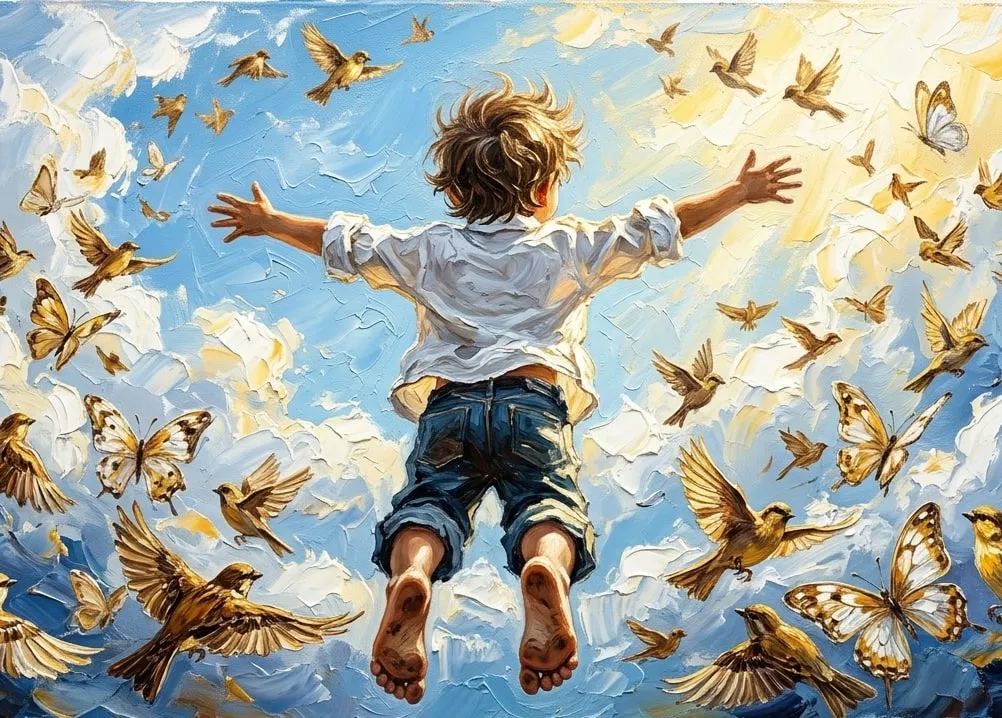
Perhaps the point is not to understand everything. That would be an impossible ambition. It is to develop a way of engaging with the world that makes understanding continually possible.
To remain curious without being superficial. To seek depth without becoming narrow. To question without becoming cynical. To create without assuming that every creation must be perfect.
And, above all, to never mistake the map for the territory, the explanation for the phenomenon, or the accumulation of knowledge for the achievement of wisdom.
The art of understanding is not simply knowing more about the world. It is learning how to see it differently, and finding the courage to participate in shaping what comes next.